If you are a fashion designer in India — whether running a boutique, working in manufacturing, or starting your own brand — one tool can completely transform your workflow: Fashion CAD software.
What Is Fashion CAD Software?
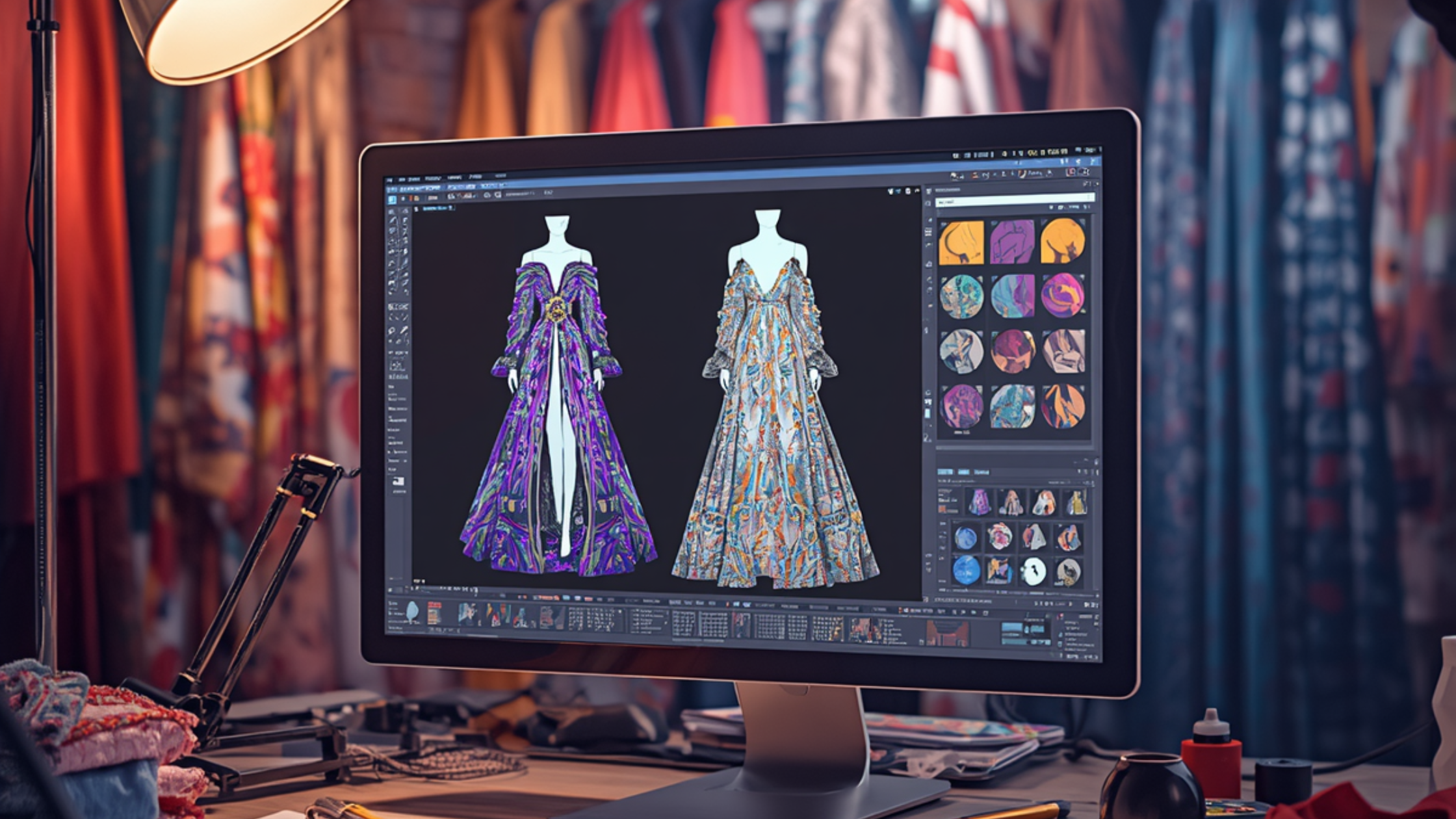
CAD stands for Computer-Aided Design. In fashion, it refers to software that helps designers create digital patterns, develop garment designs, optimize fabric usage, and automate production processes.
Instead of manual drafting and chalk marking, everything is digitized and streamlined — from your first sketch to the cutting floor.
Why CAD Is Crucial for India's Garment Industry
India's garment industry still heavily relies on manual pattern making, chalk marking, and highly skilled pattern masters. While effective, this approach takes time, leads to inconsistencies, and increases fabric waste.
THE INDIAN CONTEXT
In a country where fabric costs are one of the largest production expenses, and skilled labor availability is inconsistent across cities and tiers — CAD software is not a luxury. It's a competitive necessity for any brand serious about scaling.
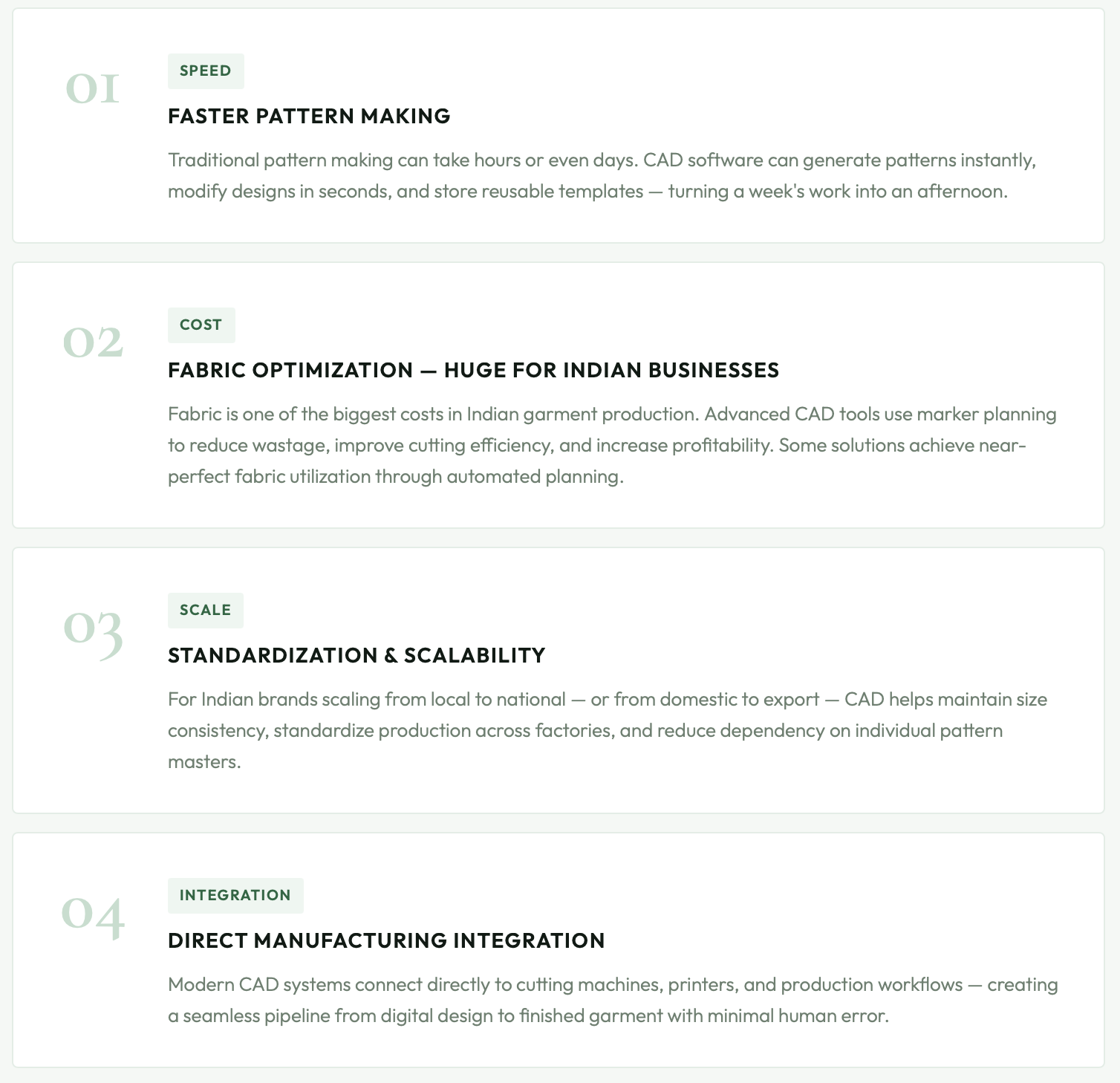
4 Key Benefits of Fashion CAD Software
Top Fashion CAD Software Used in India
TUKAcad — by Tukatech
Fashion CAD Solutions — India-Based Providers
MADE FOR INDIA
Indian-built CAD systems tailored for local garment types — blouses, kurtis, lehengas, salwars — with built-in pattern libraries and local training support.
Textile CAD Software (e.g., Textronics)
TEXTILE FOCUSED
Specialized for fabric and textile design — not just garment pattern making. Used by mills, print houses, and jacquard manufacturers.
Real Impact on Indian Businesses

How Small Indian Businesses Can Start
You don't need a large factory or enterprise budget to start using CAD. Here's a practical step-by-step approach tailored for Indian boutiques, tailoring units, and growing brands:
Choose one tool focused on digital pattern making. Don't try to do everything at once. Master the core workflow first — convert your most complex pattern into digital format as a proof of concept.
Build a reusable pattern library from your top 10–20 designs. This creates immediate ROI — these are the patterns you'll reproduce most often, and now you can resize and adapt them in minutes.
Most tools offer training support and tutorials. Invest 2–4 weeks in getting your pattern master or designer fluent in the software. Resistance usually disappears once they see the speed advantage firsthand.
Start with design → then marker planning → then cutting integration → then full automation. Don't overhaul everything at once. Phased adoption ensures team confidence and measurable wins at each stage.
CAD + 3D + AI = The Future Pipeline
The most powerful evolution happening right now is the integration of CAD with 3D design and artificial intelligence. This creates a fully digital fashion pipeline — from concept to customer — without a single physical sample