The Indian fashion industry is undergoing a quiet but powerful transformation. From tailoring units in Mumbai to export houses in Tiruppur and Surat — one technology is reshaping how garments are designed and produced.
If you are a fashion student, designer, or manufacturer in India, understanding this shift is no longer optional. It's a competitive advantage.
What Is 3D Clothing Design Technology?
3D clothing design is the process of creating virtual garments using digital tools, allowing designers to visualize, test, and modify designs before physical production begins.
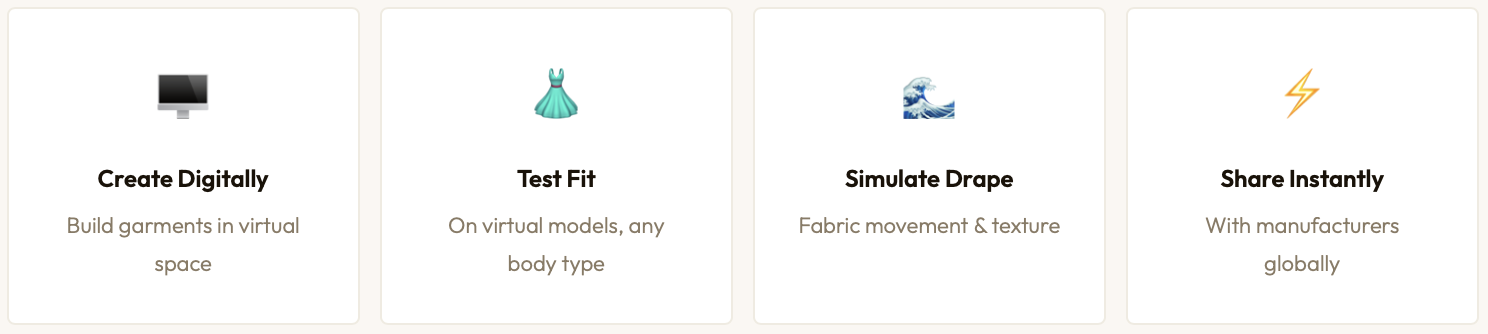
Instead of the traditional cycle — sketching → sampling → correcting → resampling (which can take weeks) — designers can now:
Why It Matters in the Indian Context
India's fashion ecosystem is unique — and its challenges make 3D design not just useful, but essential.
THE INDIAN REALITY
✦ High dependency on manual labor ✦ Fragmented supply chains ✦ Heavy reliance on physical sampling
✦ Cost-sensitive, margin-thin production environments.
3D design technology directly addresses each of these pain points.
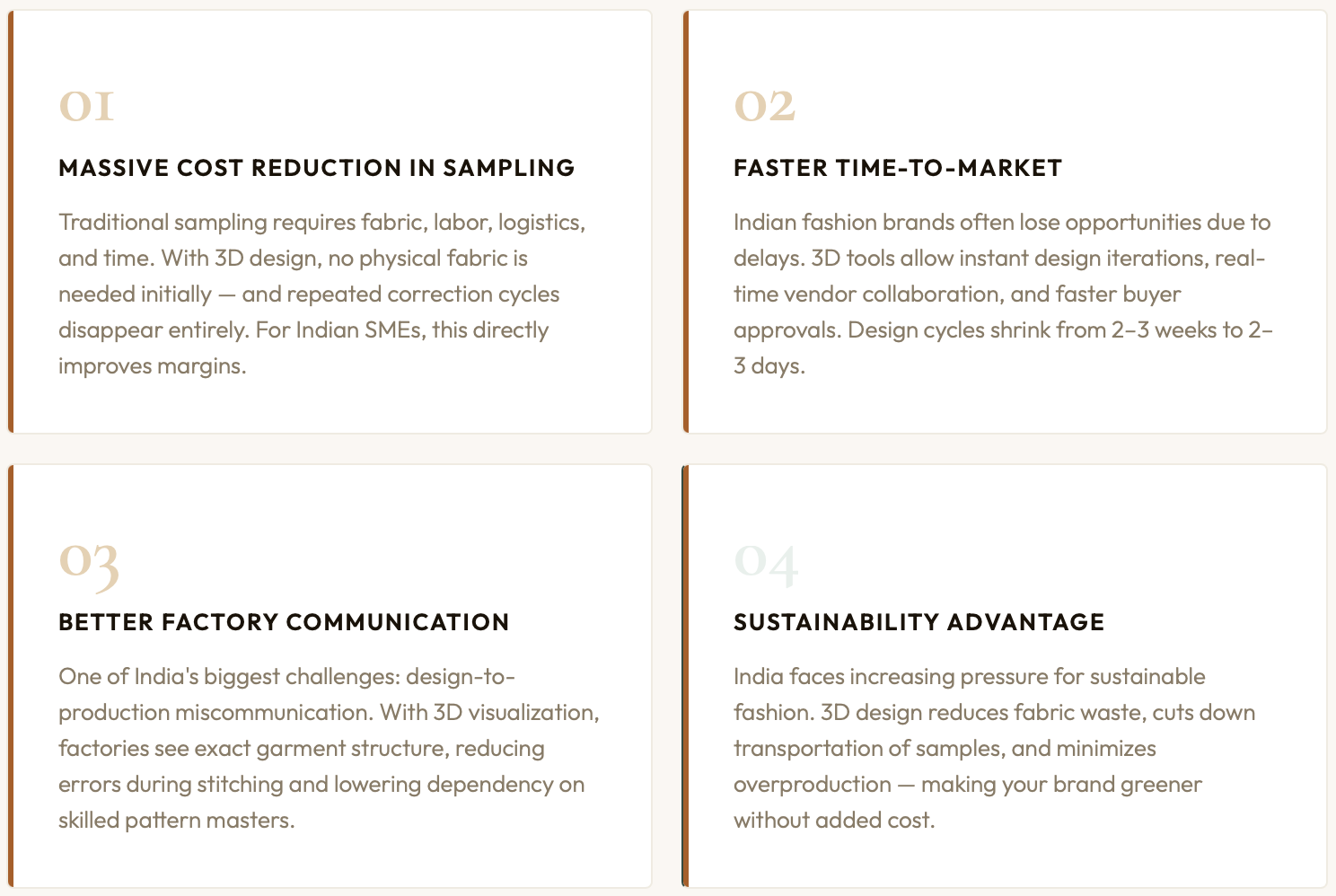
3 Key Benefits for Indian Fashion Businesses
Popular 3D Fashion Design Tools
Style3D
AI-driven design and simulation platform. Excellent for Indian designers looking for an end-to-end digital workflow, from pattern creation to photorealistic garment rendering.
TUKA3D (by Tukatech)
Virtual fit and real-time simulation. Widely used by export houses for digital buyer approvals. Strong manufacturing integration makes it ideal for Indian production environments.
CLO3D
Industry-standard 3D garment simulation software. Combines 2D and 3D workflows — ideal for both boutique designers and large manufacturers moving toward digital-first production.
Adobe Illustrator (2D Base)
The starting point for most design workflows. Works seamlessly as a 2D foundation feeding into 3D simulation tools — accessible for fashion students and independent designers.
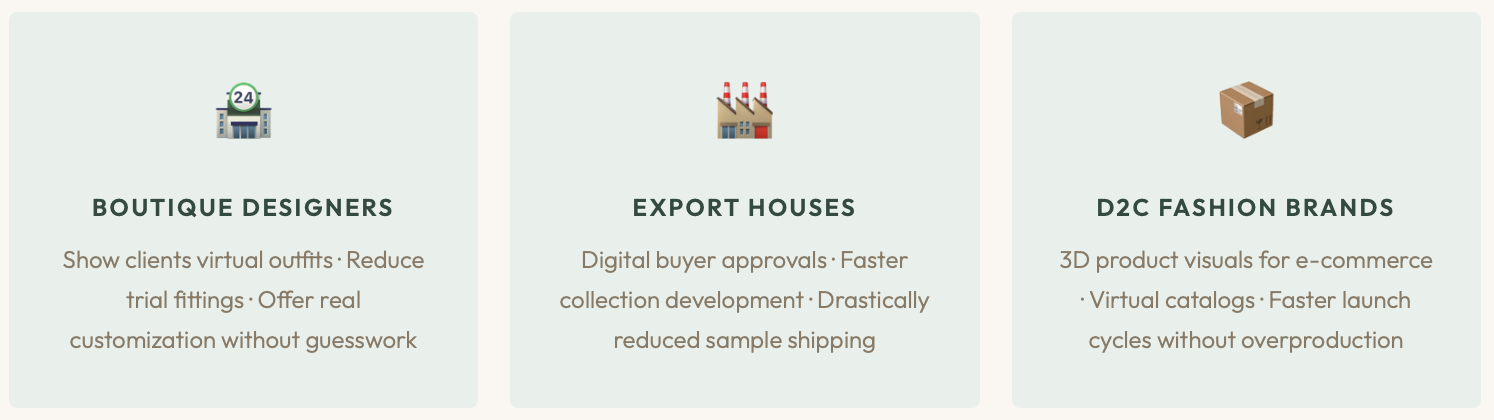
Who Is Using It in India?
Challenges Holding India Back
Despite clear benefits, adoption is still growing.
Key barriers include:
THE FASHIONCHEMISTRY VIEW
Even globally, many companies are still in early adoption. For Indian brands, the window to build a competitive edge through 3D workflows is open right now — those who move first will set the benchmark.
The Next 5 Years: What to Expect
2025–2026 AI-integrated design systems go mainstream. Pattern generation from a brief becomes possible within seconds.
2026–2027 Virtual try-on experiences become standard for Indian e-commerce, reducing return rates dramatically.
2027–2028 Digital-only fashion collections become a revenue stream — virtual garments for gaming, social, and metaverse platforms.
2028–2030 Full integration with e-commerce and ERP platforms. The physical and digital supply chain become one unified system.
The Bottom Line
3D clothing design is not just a technology — it's a shift in mindset. From "make and correct" to "design and perfect digitally."
If India's fashion industry wants to compete globally while staying cost-efficient, adopting 3D design workflows is the next logical step. The brands that start today will lead tomorrow.
|
ALSO READ
Curious about the foundation of digital fashion production? Read our complete guide to Fashion CAD Software for Indian Designers → |